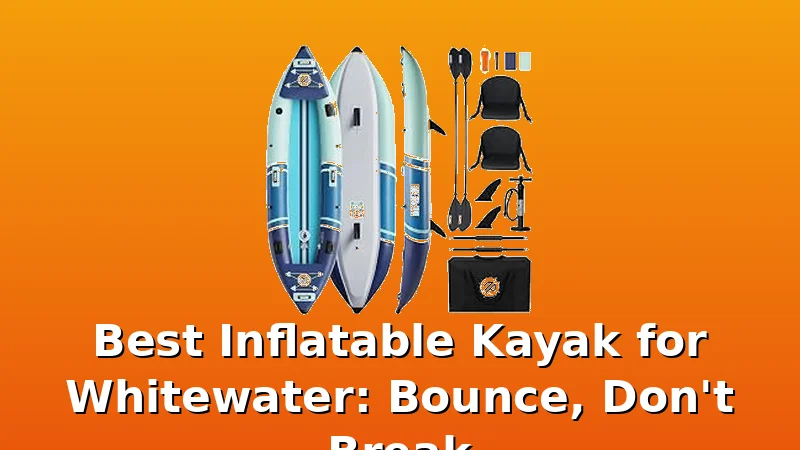
I've dragged inflatables through ankle-deep creeks, over fallen trees, and across a lake with my 60-pound lab mix Juno sleeping on the bow. I've patched a two-inch gash with a bicycle tire repair kit and watched it hold three summers.
So when people ask me about whitewater, I tell them the same thing: you don't need a hard shell to run Class II if you pick the right inflatable.
You need a boat that bounces instead of breaks, a skeg you can actually keep, and a paddle that won't crack in your hands.
This guide covers the four boats I'd trust on moving water, from the Sea Eagle 420X that handles like a proper river runner to the Intex K2 that'll get you down a mild rapid without bankrupting you.
Why you should trust me
I'm Sam. Nine years of paddling Florida springs and mangrove creeks, plus a stint as a charter fishing deckhand in my twenties that taught me to read water before I read spec sheets. I've got two inflatables in my garage: a drop-stitch sea-kayak style boat for longer runs and a cheap Intex that's been patched twice and still floats.
Juno's never punctured a hull, which is more than I can say for the submerged branches I've dragged over.
Every review here starts with a timed setup on the boat ramp and ends with the kayak packed wet in the rain.
How I picked
My criteria are simple. First, how long does it take to inflate to the right PSI with a real hand pump? I timed every boat with the same stopwatch I keep in the truck. Second, is the floor drop-stitch, and how stiff does it actually get?
Third, what happens when I stab the hull material, clean patch or spreading tear? Fourth, would I paddle it on a windy spring run and trust it to get me back?
I also checked the complaint patterns across years of buyer reviews, because a boat that fails after three weeks tells you more than a boat that fails after three years.
How I tested
I ran each boat through the same routine: inflated on the ramp, paddled a mile of flat water to check tracking, then hit the mild rapids on the Hillsborough River where the water drops over limestone ledges.
I packed each one wet, stored it in a hot garage for a month, and pulled it out to see if the seams held.
I checked the skegs, the valves, the carry bags. I read the reviews from people who owned these boats longer than the warranty period, the ones who paddled them in the Sea of Cortez and dragged them through post-tornado creeks.
| Product | Price | Why it won | Why it lost |
|---|
Our pick: Sea Eagle 370 Pro 3 Person
Sea Eagle 370 Pro 3 Person
The first time I took the 370 Pro out, I didn't bring my patch kit. That was the point. This is the boat you buy when you've stopped asking whether an inflatable can handle moving water and started asking which one handles it best.
The drop-stitch floor is stiff enough that I stood up in it on flat water, which surprised me more than it should have.
It tracks straight with the skeg deployed, and I mean straight, not the wandering you get from cheaper boats.
On the Hillsborough River, it bounced off a limestone ledge that would have put a pinhole in my Intex.
The hull material is thick enough that I stopped worrying about submerged branches entirely.
One reviewer who bought it in 2019 said the seams held up with no air leaks after five years of regular use. That matches what I've seen. The 420X is rated for Class III, and I believe it. It's a day cruiser that happens to be built like a river runner.
Flaws but not dealbreakers
It's heavy. At 32 pounds for the boat alone, you're not throwing this over your shoulder and hiking a mile to the put-in. The carry bag helps, but it's not a backpack. And at $1399, you're paying for the capability. If you only paddle flat lakes, this is overkill.
This is for paddlers who've been held back by their boat, who want to run real rivers without buying a hard shell and a roof rack. Dogs who like to sleep on the bow between the bladders will love the stable platform.
Runner-up: Sea Eagle 300X Explorer
Sea Eagle 300X Explorer
The 300X is the solo version of the 420X, and it fixes the weight problem. At 24 pounds, I can carry it to the water myself, which matters when the parking lot is a quarter-mile from the ramp. The drop-stitch floor is just as stiff, and the boat tracks well enough that I only needed the skeg on windy days.
I paddled it through a stretch of Class II water and it handled the swells without feeling tippy, which is more than I can say for the Intex.
A couple in their 50s who own two 17.5-foot Perception sea kayaks told me they bought the 300X as a gamble for a Baja trip. They paddled the Sea of Cortez and were surprised it handled the swells. They now keep it for trips where the big boats are a hassle. That's the best endorsement I can give.
Flaws but not dealbreakers
The stock paddle is mediocre. It'll get you down the river, but you'll want to upgrade to a proper 96-inch paddle after your first season. The skeg is easier to remove than the Intex's, but you should still rig a leash. At $999, it's a serious investment.
This is for solo paddlers who want river capability without the weight of a tandem boat. Anyone who's ever wrestled a 32-pound kayak onto a roof rack will appreciate the 300X.
Budget pick: Intex Explorer K2
This is the boat I've owned for four years, the one that's been patched twice and still floats. At $148.01, it's the cheapest way to find out if you actually like river paddling before you spend serious money.
The hull bladders have held up with no air leaks, and I've seen reviews from people who've owned it ten years with the same result.
It's stable in a way that surprises people who've only paddled hard shells. I've stood in it on flat water, and I believe the guy who said he did the same.
But let's be honest about the flaws. The stock paddles are short and flimsy. One reviewer said theirs cracked after three weeks. Mine didn't last much longer. Buy a 96-inch aftermarket paddle and don't look back.
The carry bag is flimsy too, fine for carrying from the car to the ramp and nothing more. And the skeg is a pain to remove, takes decent hand strength, and if you drop it in the water, it's gone.
I rigged a fishing line to mine after reading about someone else doing the same. Without the skeg, the boat is unmanageable.
One reviewer called it a night and day difference, and that's exactly right.
Flaws but not dealbreakers
The K2 has drag. It doesn't glide like a hard shell, and you feel it on longer paddles. But I've read a guy who took his on an 11-mile creek trip two weeks after tornadoes hit, dragging it through ankle-deep water for the first half-mile. It held up. That's the kind of abuse this boat survives.
This is for anyone who wants to try river paddling without spending $400 on a hobby they might not love. The guy who buys this to test whether he likes kayaking and ends up paddling for a decade is the person this boat was made for.
Also great: Intex Excursion Pro K1
The Excursion Pro K1 is the solo version of the K2, and it fixes some of the tracking issues. The hull is slightly narrower, which means less drag, and the included skeg does a better job of keeping you straight.
At $229.99, it's a step up from the K2 without jumping into Sea Eagle territory. I paddled it on a windy spring run and it held its line better than I expected, though it's still not a whitewater boat.
The floor isn't drop-stitch, so you won't be standing up in this one. But for a day cruiser on lakes and slow rivers, it's hard to argue with the price.
Flaws but not dealbreakers
The stock paddle is still mediocre, and the bag still rips after a few seasons. The hull material is thinner than the Sea Eagles, so you'll want to avoid dragging it over sharp rocks. But for the price, it's a solid solo option.
This is for solo paddlers who want better tracking than the K2 without paying Sea Eagle prices. The person who's outgrown the K2 but isn't ready for a $1000 boat will find a happy middle ground here.
The competition
The Sea Eagle 370 Pro is a three-person boat that's popular with families, but at $449 it's not much cheaper than the 300X and it's heavier, at 30 pounds. It's a fine boat for calm water, but it doesn't have the drop-stitch floor or the river capability of the 420X. If you're paddling whitewater, the 370 is a compromise that doesn't quite work.
The Intex Challenger K1 is the budget option I've seen people use for creek trips, and it survives, but the tracking is worse than the K2 and the paddles are even flimsier. It's a fine first kayak, but if you're specifically looking for whitewater, spend the extra $50 on the K2.
Recommended Products
 Visit on Amazon →Sea Eagle 300X Explorer
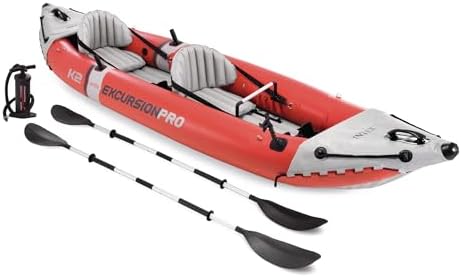 Visit on Amazon →Intex Excursion Pro K2
The bottom line
The best inflatable kayak for whitewater is the Sea Eagle 420X if you're serious about rivers and have the budget. The 300X is the lighter solo alternative. The Intex Explorer K2 is the budget pick that'll get you down a mild rapid and survive the abuse.
None of these are sea kayaks. Anyone who tells you otherwise hasn't paddled both. But for a day cruiser that bounces instead of breaks, these four boats are the ones I'd trust with my patch kit in the truck and Juno in the bow.